
Roofers in Twickenham, TW1 and TW2
Last reviewed 24 October 2026
Twickenham is a town centre, a riverside, a rugby stadium and a lot of Edwardian streets. Property Restoration Services London Ltd repairs and renews roofs across all of it, including the shops and flats along King Street and Church Street, and schedules the work around match days.
Which Twickenham Roof Do You Have? Four Roofscapes
Twickenham has four main roof types: mixed early and Victorian roofs around Twickenham Green and Heath Road, Edwardian slate roofs in Lebanon Park, late Edwardian semis on Queens Road, and shop, restaurant and river-exposed roofs on Church Street and the riverside.
Richmond Council's conservation area appraisals describe Twickenham as a patchwork. Twickenham Green was one of the first places developed away from the river after enclosure in 1813, so it mixes early nineteenth century cottages, mid nineteenth century houses and later red brick houses and shop parades. A few streets away the pattern changes completely. These are the four we are asked about most.
Twickenham Green and Heath Road
Early cottages, mid Victorian houses and red brick parades around an open green, with a varied roofline.
We check: old chimney stacks, patched valleys and shop parade rear roofs.
Lebanon Park
A distinctive Edwardian group built in the former garden of Lebanon House. The council notes largely unaltered slate roofs running downhill toward the river.
We check: slate fixings, ridge lines and gutters along the slope.
Queens Road
Mainly late Edwardian, mostly semi-detached houses, with large Victorian buildings at the eastern edge in polychromatic brickwork.
We check: shared chimney stacks, bay roofs and flashings at the party walls.
Church Street and the riverside
The older pedestrian street running to the Thames, Eel Pie Island opposite, and the Embankment.
We check: shop and restaurant roofs, flues, damp exposure from the river.
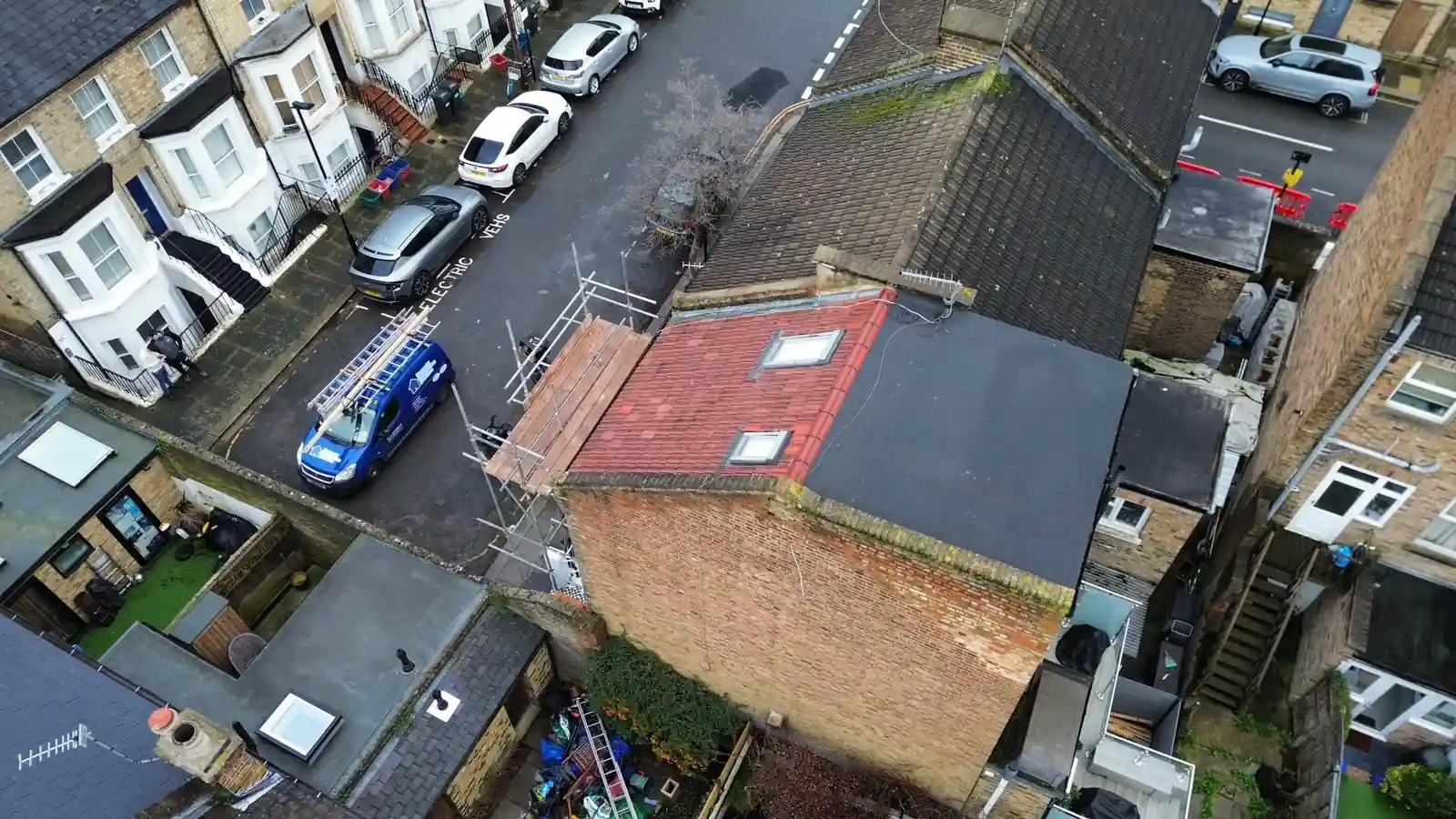
How Do You Book Roof Work Around Rugby Match Days?
We check the fixture calendar when we agree a start date, time scaffold and deliveries away from fixture days, and keep the roof weathertight if a fixture falls mid job. Twickenham Stadium is on Whitton Road in TW2, and major fixtures can restrict nearby streets.
Twickenham Stadium, the home of England rugby on Whitton Road in TW2, can bring road closures, heavy foot traffic and parking restrictions to the streets around it on major fixture days. A scaffold delivery that is easy on a Tuesday can be impossible on a Saturday in November.
- At the quoteWe ask where you are, and flag any fixture clashes in the likely work window.
- Before the startScaffold and material deliveries are timed away from fixture days.
- During the jobAccess routes and parking are agreed with you so neighbours are not blocked.
- Fixture daysIf a fixture falls mid job, we keep the roof weathertight and avoid work in closed streets.
What About the Shops and Flats on King Street and Church Street?
Yes. We repair and renew flat roofs, rooflights and rear roofs on shops, offices and flats along King Street and Church Street, with a written scope, photographs of defects and access arranged with the unit below. Timing around trading hours can be discussed.
King Street is the main shopping street and Church Street is the older, pedestrianised street running down to the river. Both have flats and offices above ground floor businesses, and flat roofs, rooflights and extract flues at the back. We provide flat roofing and roof repairs for owners, landlords and managing agents, and can discuss timing around trading hours.
- A written scope of works and photographs of defects found
- Safe access arranged with the unit below
- Outlets, upstands and flashings checked as part of every flat roof visit
- A written summary after the work, for your records or your service charge file
TW1 or TW2: What Is the Roofing Difference?
TW1 covers the town centre, Church Street, King Street, the Green and the riverside, with older Victorian and Edwardian roofs and shop roofs. TW2 includes the stadium and later housing toward Whitton, with more inter-war semis and extension roofs.
| Question | TW1 (town centre and riverside) | TW2 (toward Whitton) |
|---|---|---|
| Housing | Victorian and Edwardian terraces and villas, plus the high street | Generally later than the town centre, with more inter-war semi-detached houses |
| Common roof | Slate or clay tile pitched roofs, lead valleys and flashings | Tiled pitched roofs with a later flat or low pitch extension roof |
| Typical jobs | Slate repairs, chimney work, shop and flat roofs | Tile repairs, extension roof renewal, gutters |
| Access | Narrow streets, pedestrian areas, high street deliveries | Fixture day restrictions near the stadium |
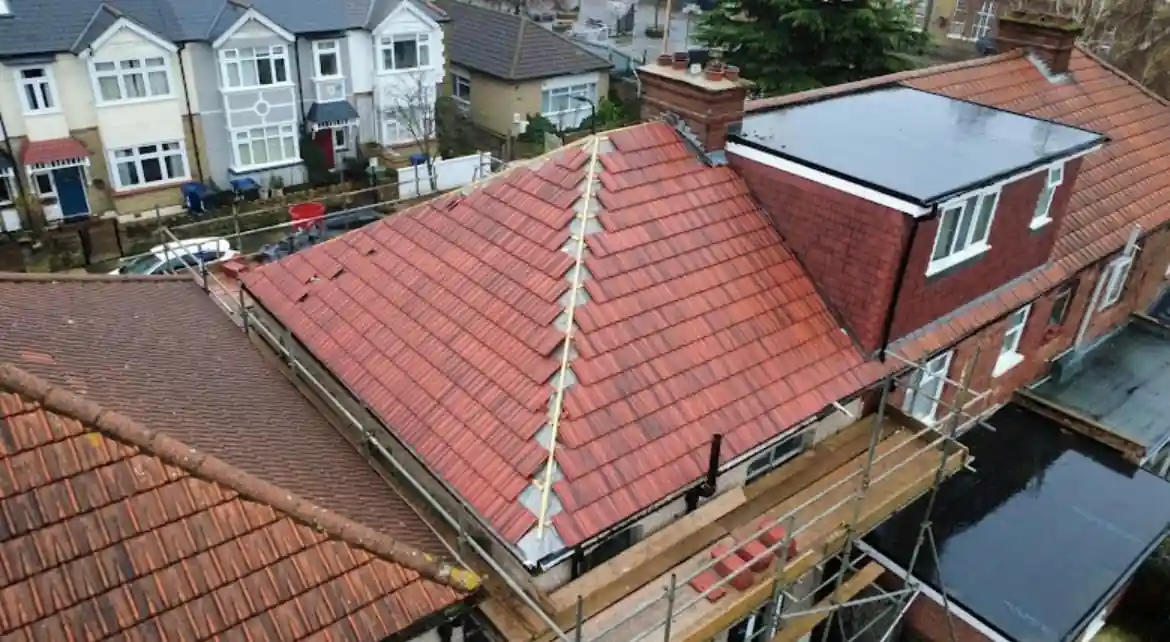
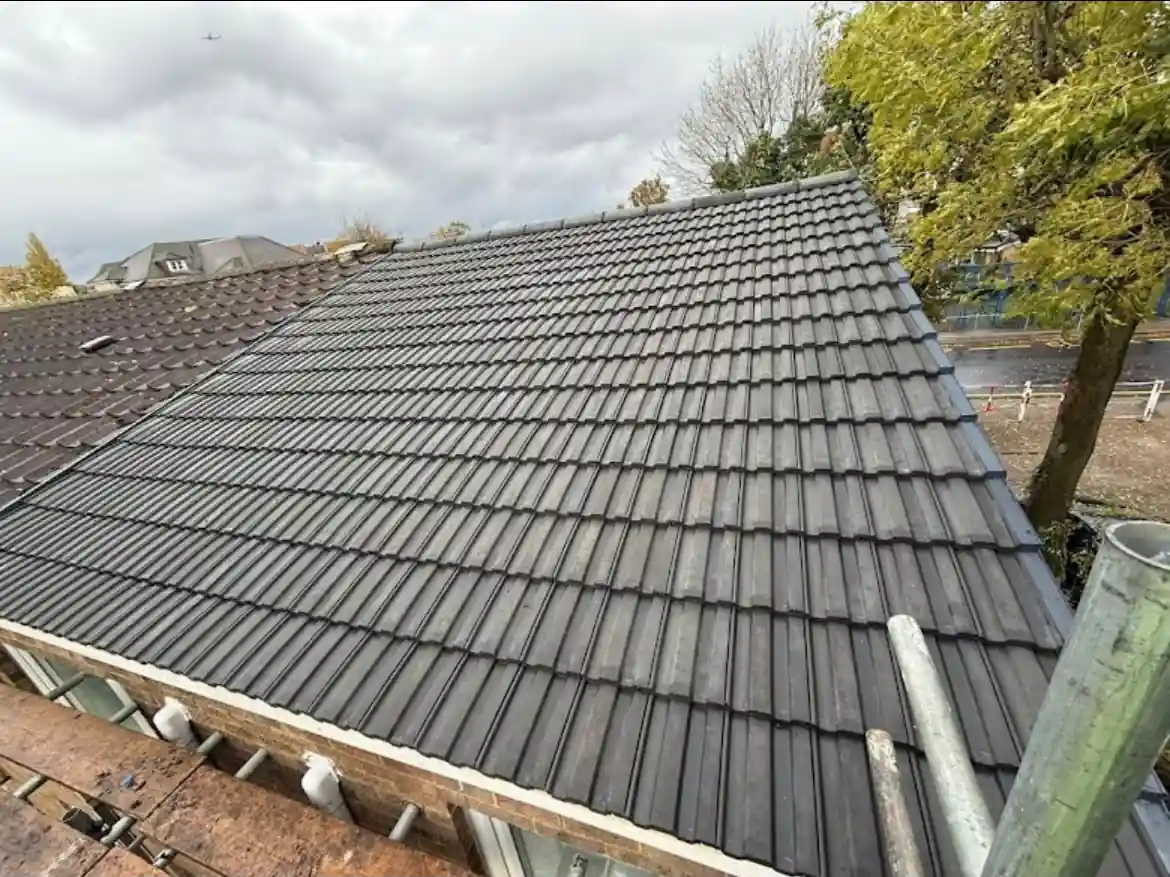
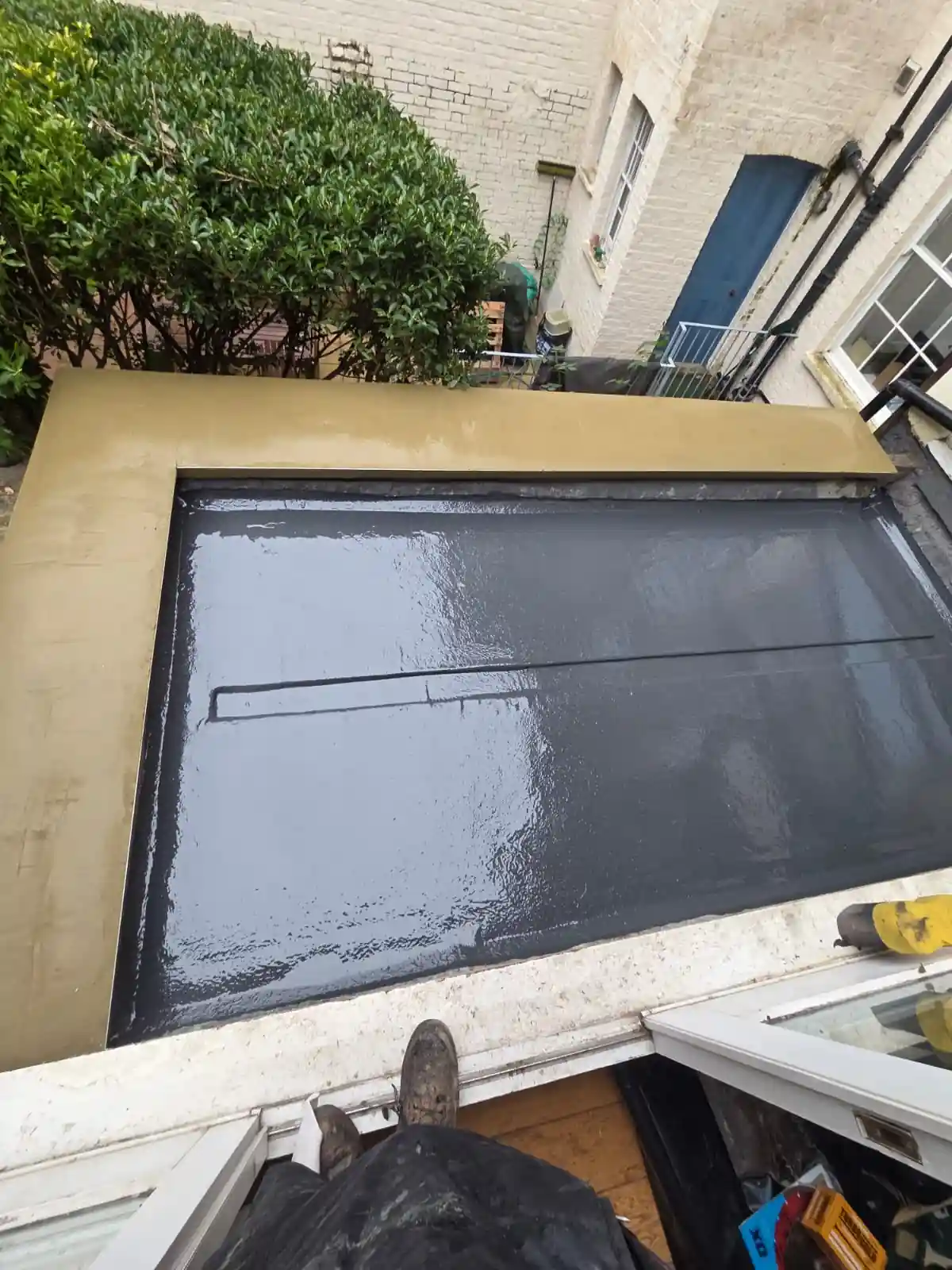
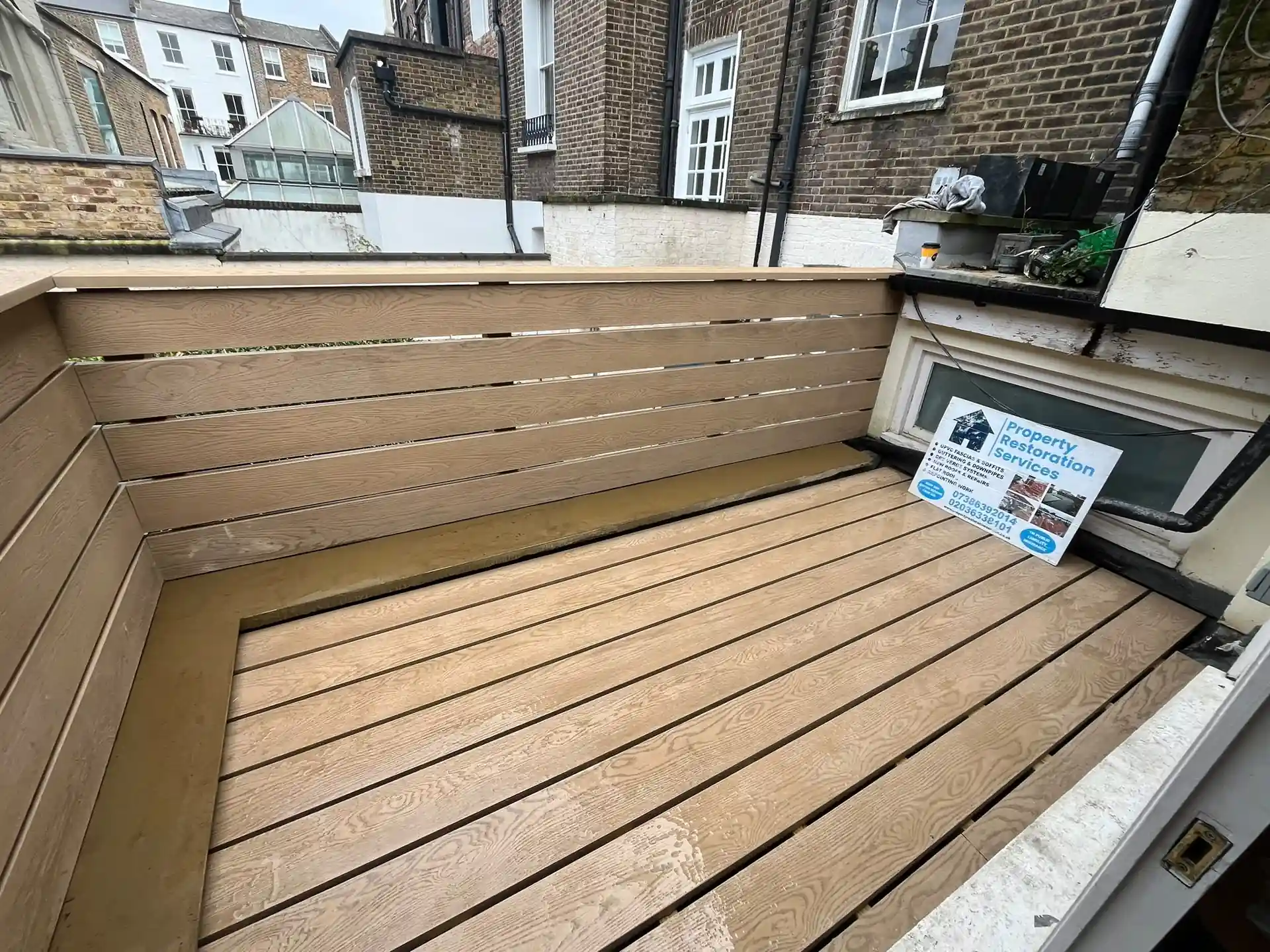
Photographs are examples of our workmanship, not Twickenham addresses.
What Do Twickenham Homeowners Ask About Roofing?
Do you schedule roof work around rugby match days?
Yes. Twickenham Stadium can bring road closures, heavy foot traffic and parking restrictions to nearby streets. When we agree your start date we check the fixture calendar and plan scaffold and material deliveries away from fixture days. If a fixture falls mid job, we keep the roof weathertight.
Which part of Twickenham do you cover, TW1 or TW2?
Both. TW1 covers the town centre, Church Street, King Street, the Green and the riverside. TW2 includes the stadium on Whitton Road and the later housing toward Whitton. We also cover neighbouring areas such as St Margarets, Strawberry Hill and Teddington.
What are the signs that an Edwardian slate roof near Lebanon Park needs attention?
Look for slipped slates in a line, slates lying in the gutter, daylight visible in the loft and brown stains on ceilings. Richmond's appraisal notes the largely unaltered slate roofs in Lebanon Park, which means original fixings that are now ageing. We inspect the whole slope, not just the visible gap.
Can you repair the flat roof over my King Street shop or flat?
Yes. We repair and renew flat roofs, including outlets, upstands and rooflight seals, for shops, offices and flats on King Street, Church Street and nearby. We give a written scope and arrange access with the unit below.
Do I need permission to replace the roof covering in a Twickenham conservation area?
Like for like repairs usually do not need it. Twickenham has several conservation areas, including Twickenham Green, Twickenham Riverside and Queens Road, and changes to how a roof looks can need consent. Check your address on Richmond Council's website before planning anything beyond a matching repair.
How do I know if my chimney stack is safe?
Look for leaning, loose bricks, crumbling mortar, cracks and damp patches on the chimney breast inside. If you see any of these, do not use the fireplace until the stack has been checked. We inspect stacks from the roof, repoint, rebuild leaning sections and renew lead trays.
Do you handle roofs near Eel Pie Island and the Embankment?
Yes. Riverside properties can see more damp and wind exposure. We inspect gutters, ridge lines and flashings and repair accordingly.
What should I do about a leak during a major match weekend?
Contain the water, photograph the damage and phone us on 020 3633 8101. Emergency callout is available outside office hours, and we can often make the roof weathertight first. If roads are closed, we will tell you honestly what access is possible and when.
Contact Property Restoration Services
Property Restoration Services London LtdUnit 101, 295 Chiswick High Road
Chiswick, London, W4 4HH
Phone: 020 3633 8101
Email: info@propertyrestorationservice.co.uk
Office hours: Monday to Friday, 8am to 6pm. Emergency callout is available outside these hours.
Sudden leak or storm damage? See emergency roof repairs in Twickenham.
Neighbouring areas we cover
About us and completed jobs.