Frequently Asked Questions About Emergency Roof Repairs in Twickenham
The questions below cover what Twickenham customers ask us most often when calling about an emergency.
What counts as a genuine roofing emergency in Twickenham?
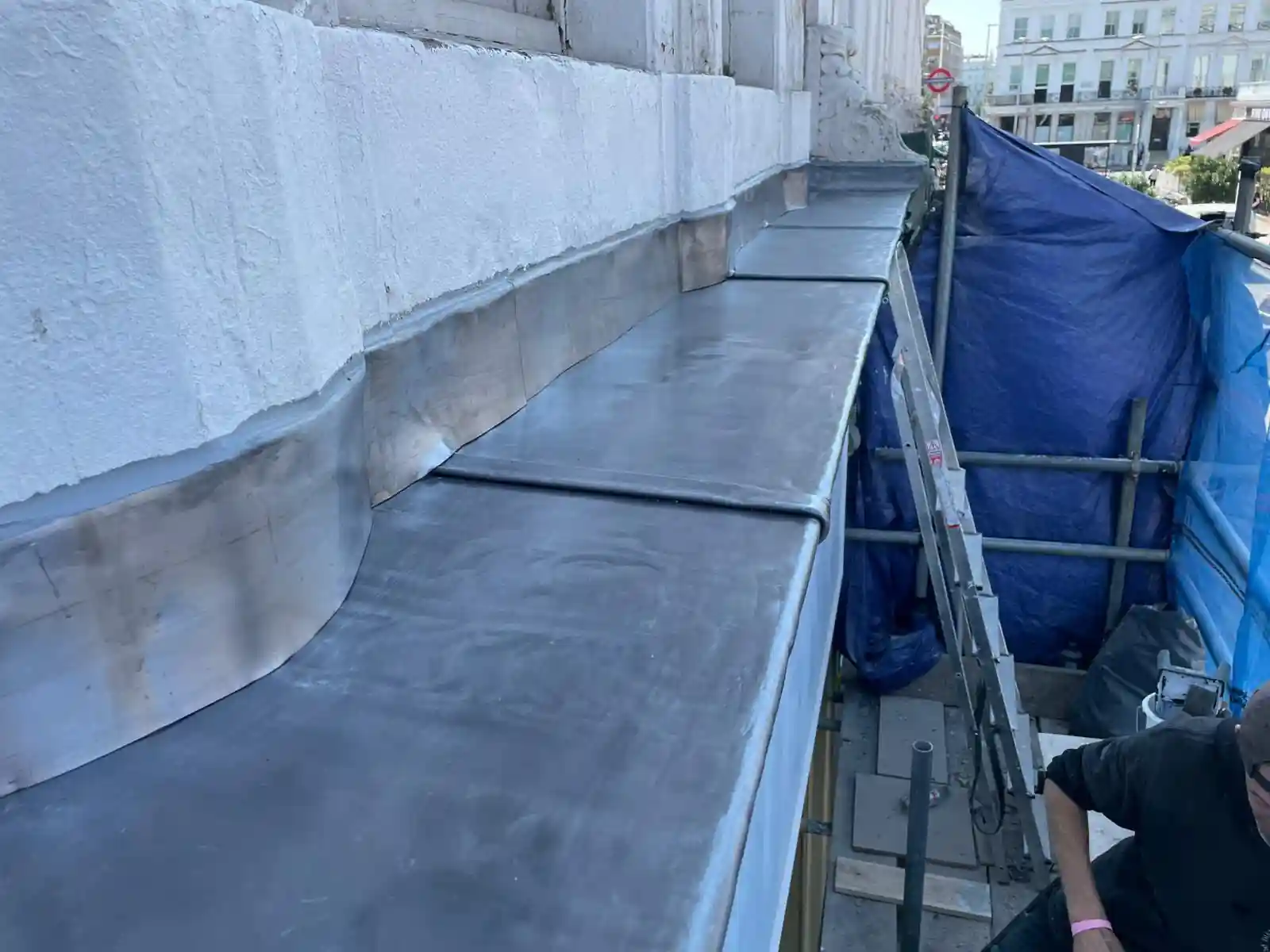
A genuine emergency is anything where water is actively entering the property, where storm damage has left the roof structurally unsafe, or where a slipped slate or loose chimney stack poses an immediate risk to people below. In Twickenham, this includes thinned lead flashing failing at a chimney near Amyand Park Road or storm damage to a terrace near Church Street. A single missing tile with no water ingress, or general wear noticed during dry weather, is better booked in as a standard repair, and we will tell you honestly on the phone which category your problem falls into rather than treating every call as maximum urgency.
How fast can you attend an emergency in Twickenham, including out of hours?
We aim to attend a genuine emergency in Twickenham the same day it is reported. Our office hours are Monday to Friday, 8am to 6pm, and emergency callout is available outside these hours, a fact we state honestly rather than claiming a blanket 24 hour service that does not reflect how we actually operate. Response time can vary during severe weather, when demand rises sharply across Southwest London. On a Twickenham Stadium match day, road closures around Amyand Park Road and London Road can add time to an emergency callout near the ground, and we factor this into our response when a fixture falls on the relevant date.
Do you provide temporary weatherproofing on the first visit?
Yes, where access allows, we apply temporary weatherproofing, such as sheeting a storm damaged section or temporarily sealing failed lead flashing, on the same visit as the emergency callout. This is designed to stop further water ingress and protect the property until a permanent repair can be scheduled, not to fix the underlying problem outright. Given how common degraded underlay is beneath Twickenham's original Welsh slate, we check the wider condition of the roof before confirming the temporary fix. The permanent repair itself is quoted separately once the immediate danger has been dealt with.
Will you provide a report or photos for my insurance claim?
Yes, we provide a photographic report on every emergency visit in Twickenham, useful for supporting a claim with your buildings insurer. The report covers what we found on arrival, what temporary weatherproofing was applied, and our assessment of the cause, which is particularly useful where thinned original lead flashing has failed, since insurers often want a clear record of the specific failure point. We are not a claims management company and do not deal with your insurer directly on your behalf, but the documentation we provide is written to be usable as supporting evidence for your own claim.
Is there a call out charge for an emergency visit in Twickenham?
All quotes are provided following an initial assessment of the work required, and we do not state a call out figure in advance without seeing the problem, since an emergency involving failed lead flashing can range from a straightforward temporary seal to a more involved repair depending on the underlay condition beneath it. What we can tell you honestly on the phone is the general nature of the visit, whether it is likely to be a quick fix or a more involved job, so you are not caught by surprise. The permanent repair quote that follows the emergency visit is always written and always no obligation.
Do you attend emergency callouts at night or on weekends in Twickenham?
Yes, emergency callout is available outside our normal Monday to Friday, 8am to 6pm office hours, including evenings and weekends, for genuine emergencies such as an active leak or storm damage putting the property at risk. We ask the same triage questions regardless of the time of day, since not every out of hours call needs an immediate attendance, and we would rather be honest about that than charge for unnecessary urgency. Where an out of hours callout is genuinely needed in Twickenham, we aim to get an engineer to you as quickly as safely possible, including around Church Street and King Street.
What causes most emergency roof failures in Twickenham specifically?
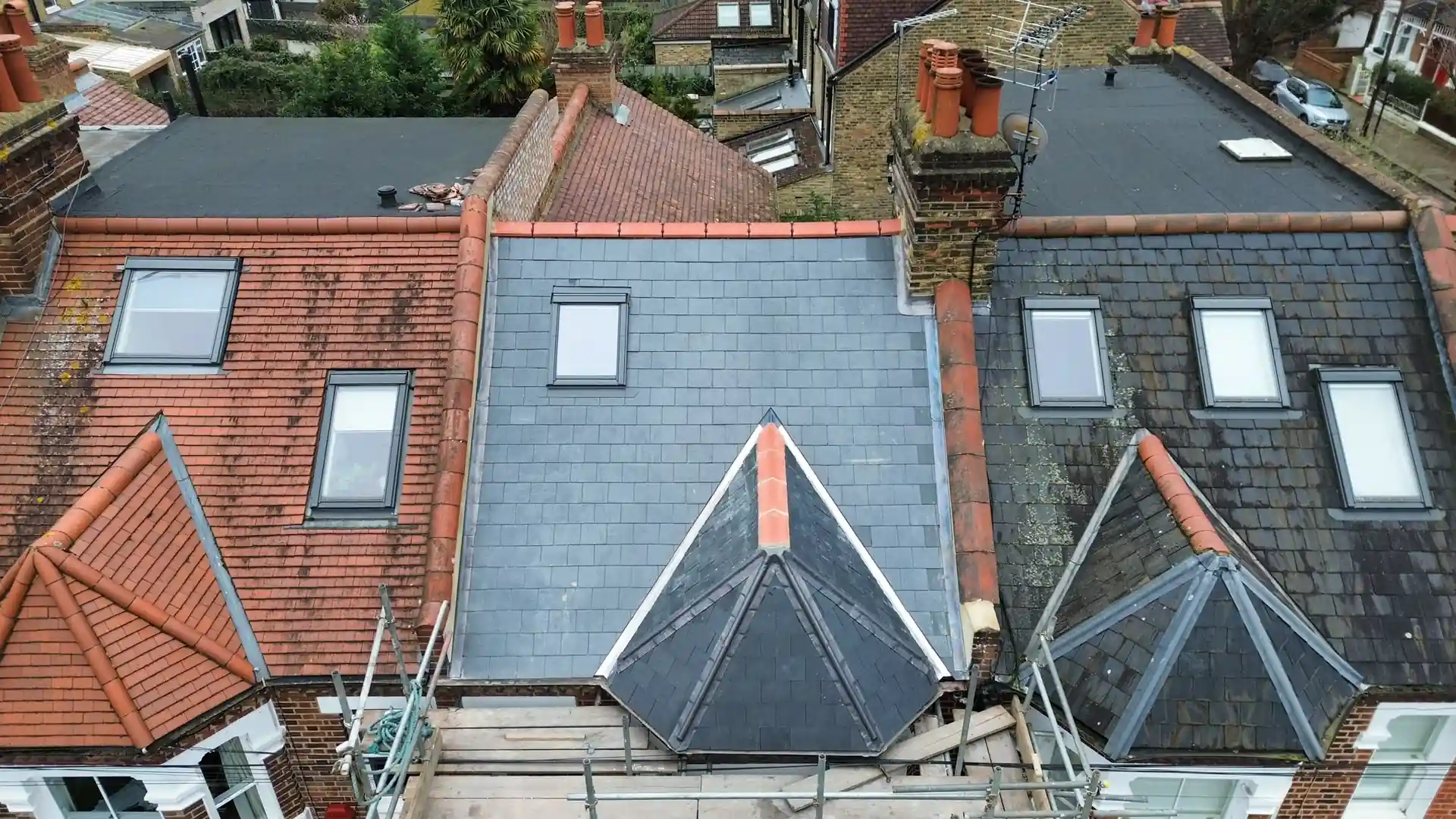
The most common cause we see across Twickenham's Victorian and Edwardian terraces is thinned original lead flashing at chimneys and valleys, combined with degraded or non-existent torch bedded lime underlay beneath the slate, a specific ageing condition rather than general wear. Once this weakened flashing or underlay is put under real pressure by a storm, failure can be sudden rather than gradual. On streets nearer Twickenham Stadium, storm damage combined with restricted match day access can also delay a follow up permanent repair if not planned around published fixture dates.
Does a match day at Twickenham Stadium affect emergency roof access?
Yes, on the day of a fixture itself, road closures and heavy footfall around Twickenham Stadium can genuinely slow access to nearby streets including Amyand Park Road and London Road for several hours either side of kick off. We plan around published fixture dates and avoid scheduling non urgent work near the ground on those days. A genuine emergency callout on a match day may take longer to reach a property immediately around the stadium specifically, though the rest of Twickenham, including Church Street and King Street, is generally unaffected and reached on our normal response time.
Is a roof emergency my responsibility or the freeholder's in Twickenham?
This depends on the freehold, leasehold and party wall arrangements for the specific building, and Twickenham has a mix of single family terraces, terraces converted into flats, and shops with flats above on Church Street and King Street. Where a property has been converted into flats, responsibility for the main roof usually falls to a management company or freeholder rather than an individual leaseholder. In a genuine emergency we make the property safe first regardless of the liability question, then help you identify where the fault lies so you can follow up with your neighbour, freeholder or managing agent afterward.
What should I do while waiting for the emergency roofer to arrive?
Move any furniture, electronics or belongings away from the area where water is entering, and use a bucket or container to catch dripping water and protect flooring. Do not go onto the roof or into the loft space yourself to inspect or attempt a repair, this is a genuine safety risk, particularly in wet or windy conditions on an older Victorian roofline. If water is coming into contact with electrics or a light fitting, switch off the relevant circuit at the consumer unit if it is safe to reach. Take photographs of the damage and any water ingress from inside the property if you can do so safely, since this helps both our assessment and any later insurance claim. Call us and we will talk you through anything specific to your situation.