Frequently Asked Questions About Roofing in Gunnersbury
The questions below cover what Gunnersbury customers ask us most often.
How quickly can you attend a roofing job in Gunnersbury?
We aim to carry out an on site assessment within two working days for standard repairs across Gunnersbury and the rest of W4. For storm damage or an active leak we offer emergency callout and try to attend the same day, since a shared valley gutter on one of Gunnersbury's semi-detached pairs can let water into both sides of the roof void quickly if left unattended. Response times can vary slightly during periods of severe weather when demand rises across West London, but Gunnersbury is a core part of our coverage area given how close it sits to our Chiswick High Road base, and is not treated as a lower priority than streets nearer our office. Once we have inspected the roof we confirm a schedule for any follow up work, so you know when the job will be completed rather than waiting on an open ended timeframe.
Which parts of Gunnersbury and W4 do you cover?
We cover every street in Gunnersbury and the full W4 postcode area, from the Edwardian terraces around Gunnersbury Park to the 1930s semis nearer Wellesley Road and Gunnersbury Avenue. We also cover the neighbouring areas of Chiswick, Acton and Ealing, with Brentford and Hanwell close by, so a job that sits near a postcode boundary is not a problem. Coverage includes both residential roofing, such as tile repair and shared valley gutter maintenance on Gunnersbury's semi-detached houses, and commercial roofing for the offices and units near Chiswick Business Park. Our engineers are based on Chiswick High Road and travel out to W4 for every job, we do not subcontract Gunnersbury work to a third party roofer working under our name. If you are unsure whether your street falls inside our standard coverage area, call us and we can confirm before booking an inspection.
How much do roof repairs cost in Gunnersbury?
All quotes are provided following an initial assessment of the work required, we do not quote over the phone without seeing the roof first. Costs depend on the extent of the damage, the materials involved and how accessible the roof is, and a shared valley gutter repair on one of Gunnersbury's semi-detached pairs can look very different once we are actually up there compared with what is visible from the ground. Contact us for a free, no obligation inspection and a clear written quote before any work begins. For larger jobs, such as a full re-roof on an ageing tile roof, we provide a written scope of work you can share with a managing agent or freeholder if needed, so there is a clear record of what has been agreed before work starts on site.
How does your quoting process work?
We carry out a free, no obligation inspection before providing a quote. All quotes are provided following an initial assessment of the work required, we do not quote without seeing the roof first, since a shared valley gutter problem can look very different once we are actually up there. Once you accept the quote we schedule the work and confirm a date. There is no call out charge for the initial inspection visit anywhere within W4, whether the job turns out to be a single tile repair or a larger re-roof on a 1930s semi. We aim to give you a realistic idea of timing at the point of quoting, rather than leaving you to chase for a start date afterward, and the same process applies whether the work is a small repair or a full flat roof replacement near Chiswick Business Park.
What happens once I book a roofing job in Gunnersbury?
Once you accept a quote we agree a date and confirm what access is needed, whether that is a ladder, a tower or scaffolding depending on the roof. Our engineer carries out the agreed work, matching tile, ridge or flat roofing materials to the existing roof covering where the job is a repair rather than a full replacement. On shared valley gutter work we check the full run on both sides of the party wall as standard, since this is the most common failure pattern we see across Gunnersbury's semi-detached houses. Once the work is finished you receive a written summary of what was done, along with any maintenance advice, such as when a gutter is due for its next clearance. If anything is found during the job that was not visible during the original inspection, we discuss it with you before proceeding rather than carrying out extra work without agreement.
What roofing problems are most common in Gunnersbury?
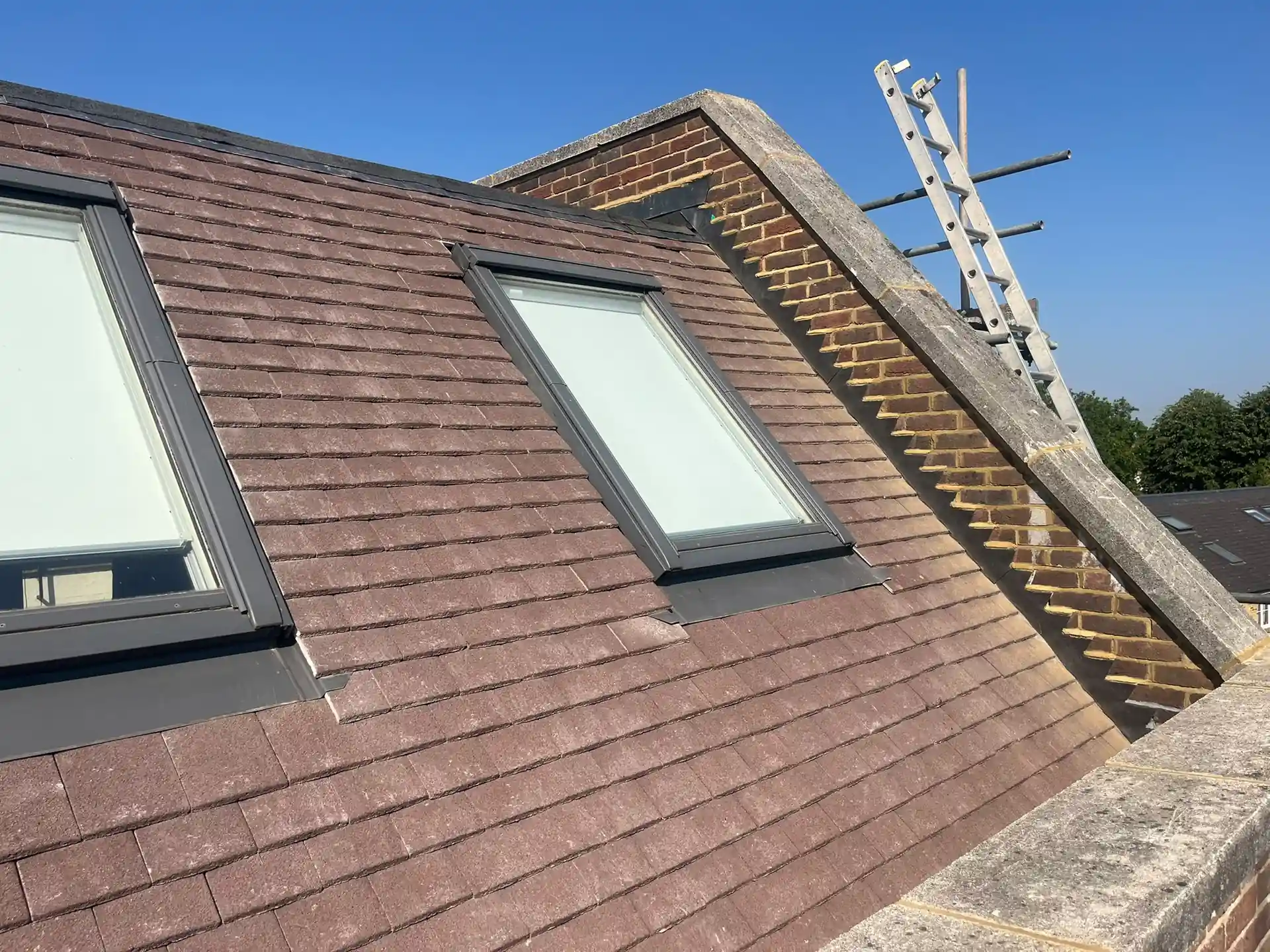
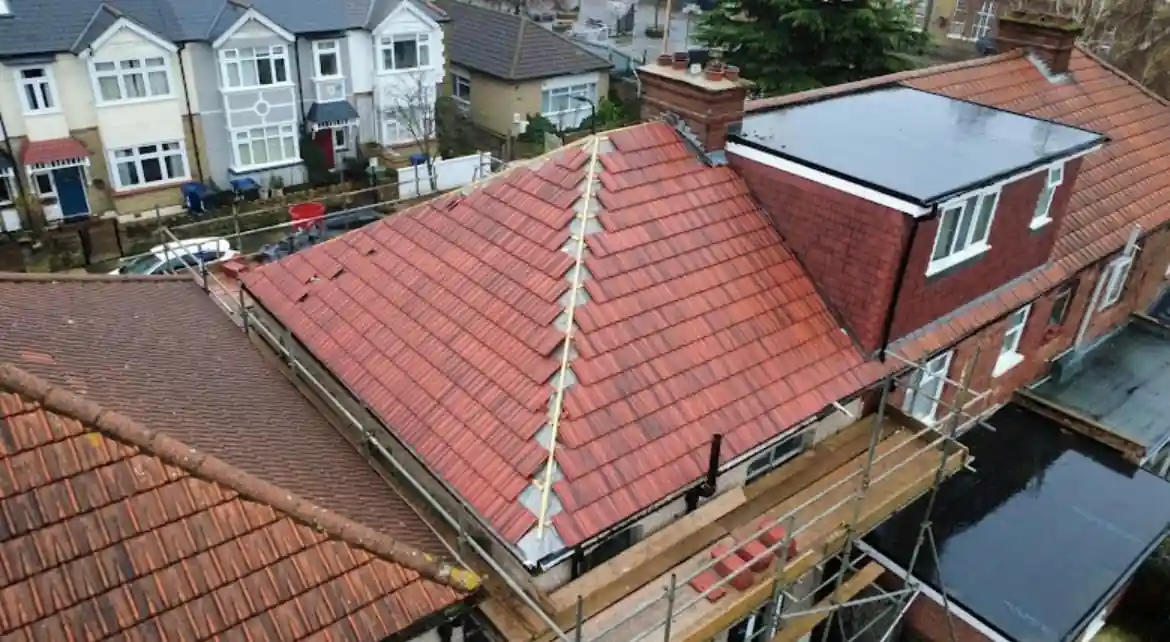
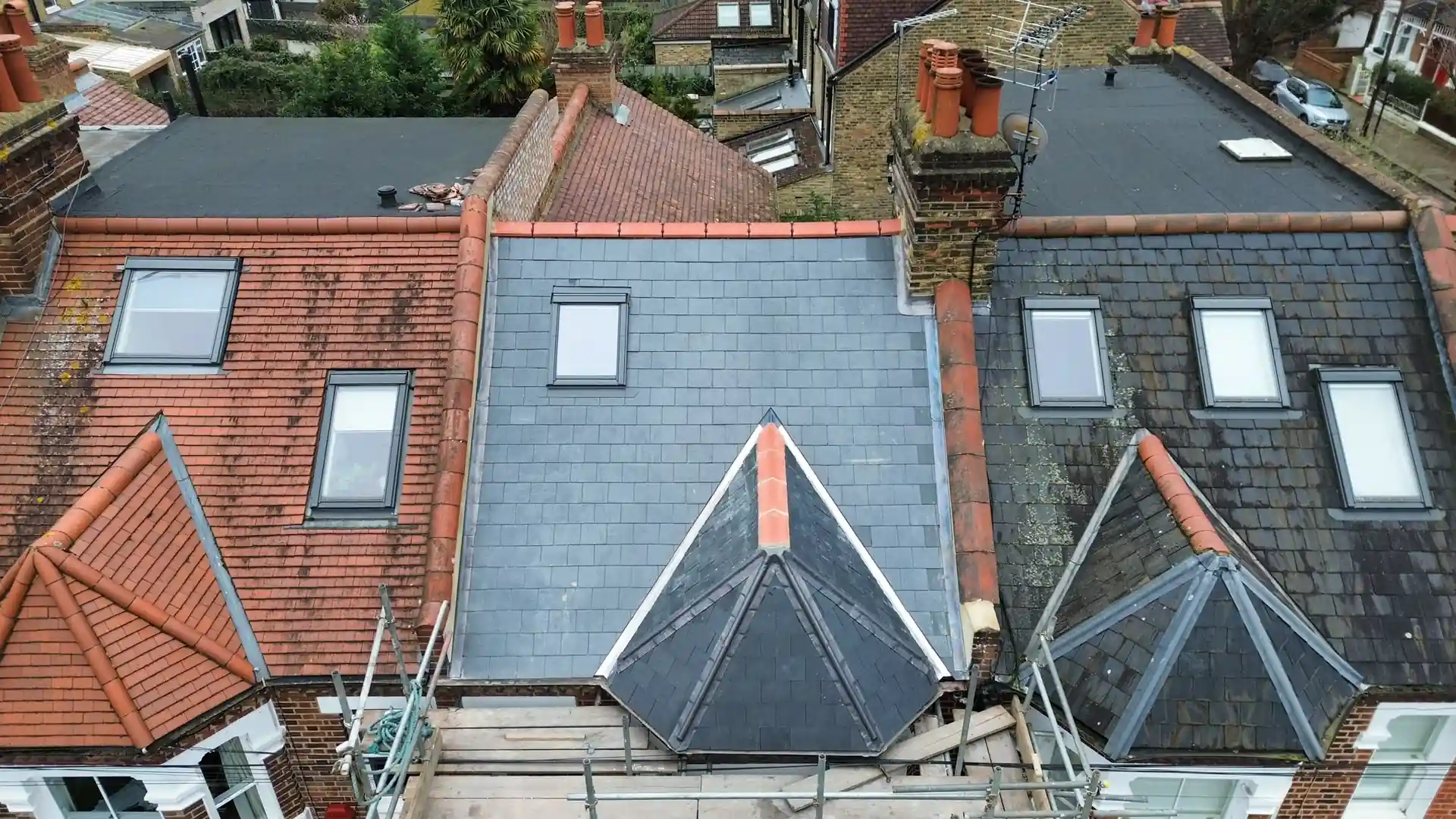
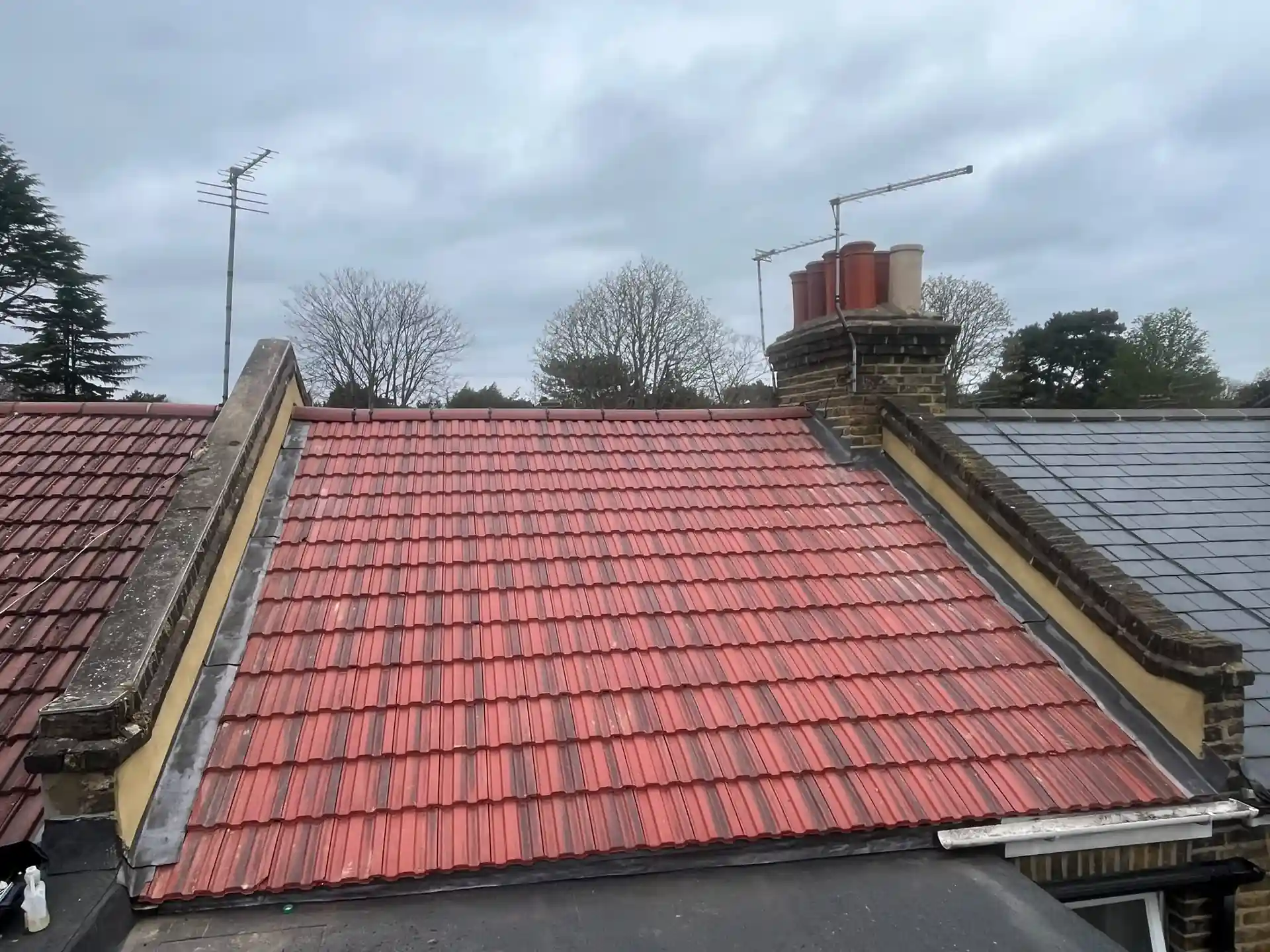
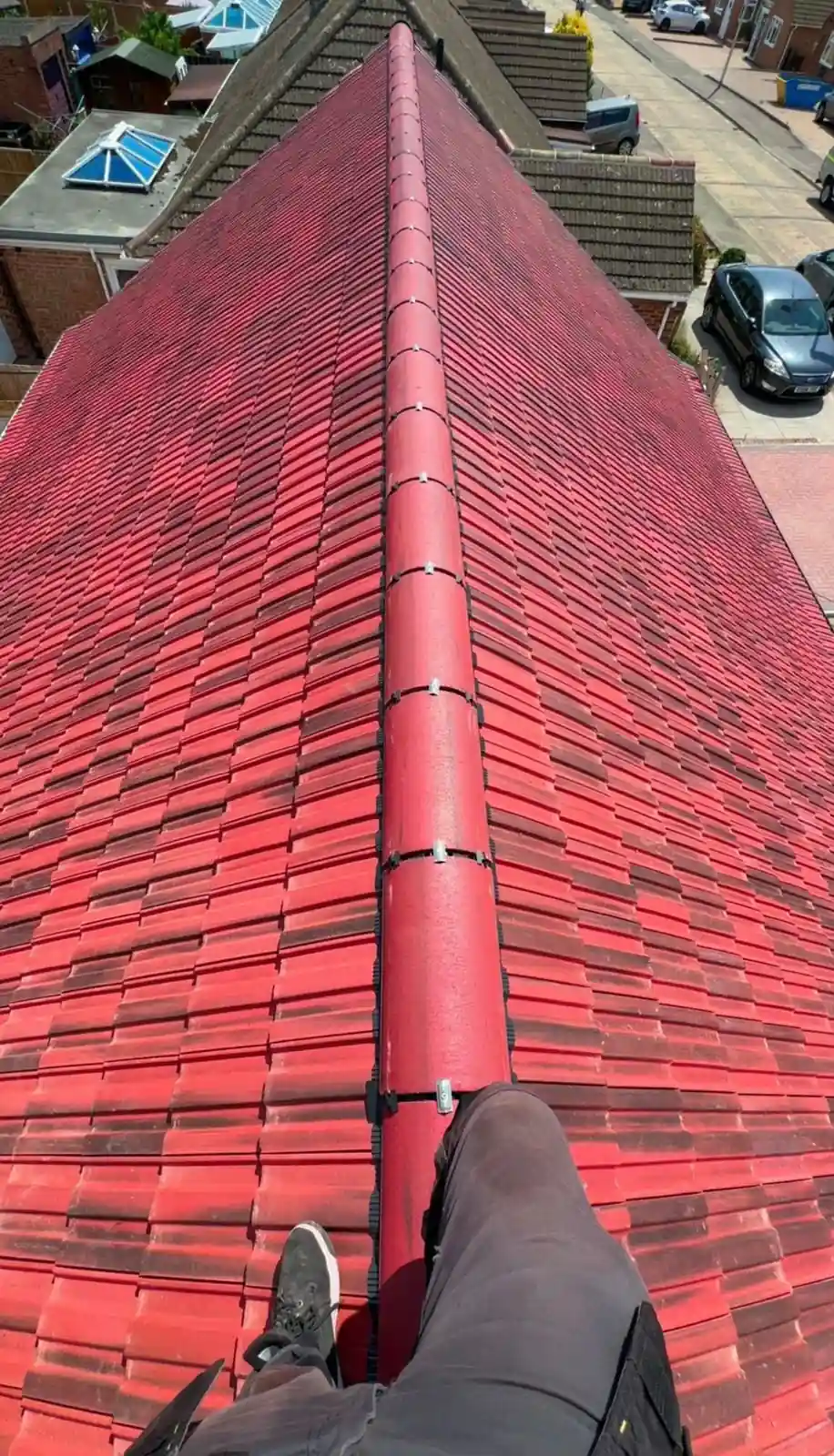
The most common issues are slipped or cracked tiles on the hip roof ends typical of Gunnersbury's 1930s semis, blocked shared valley gutters along the party wall between semi-detached pairs, and dormer flashing failures on loft conversions added since the houses were originally built. Because so many of these roofs share a valley with next door, a problem on one side of a pair often shows up as a leak on both, which is not something homeowners always expect. We also see ageing garage flat roofs reaching the end of their working life, and bay window roof aprons on the earlier Edwardian properties nearer Gunnersbury Park wearing thin with age. Streets closest to Chiswick Business Park bring a different pattern of work, with more flat roof maintenance on offices and shop units alongside the usual house repairs.
Which Gunnersbury streets do you see the most roofing work on?
We regularly work on the 1930s semis around Wellesley Road and Gunnersbury Avenue, where the shared valley gutter along the party wall is the most common call out, and on the Edwardian terraces nearer Gunnersbury Park and Popes Lane, where hip and ridge tile repair comes up more often. Properties around Gunnersbury station and Grange Road generate a steady amount of dormer flashing work, given how many of these semis have had a loft conversion added over the years. Streets nearest Chiswick Business Park bring a different mix, with flat roof repair on offices, shop units and garage roofs alongside the usual pitched roof work. We check the full roof on every visit regardless of which street the job is on, rather than assuming a lighter inspection is enough on a property further from the busier junctions.
Do I need planning permission for roof work in Gunnersbury?
Most like for like repairs do not require planning permission. Alterations that change the roofline, or work on a property inside the Wellesley Road conservation area, are more likely to need consent, and a number of the 1930s semis in that part of Gunnersbury fall into this category. We flag anything that may need consent during the inspection so you can check Hounslow Council's planning permission guidance before proceeding, rather than assuming a straightforward repair and finding out otherwise partway through the job. This is worth confirming early on any loft conversion or dormer project too, since a new roofline change is treated differently from a like for like tile replacement. We would rather flag a possible consent question during the initial inspection than have it surface once work is already underway.
Who is responsible for a shared valley gutter, me or my neighbour?
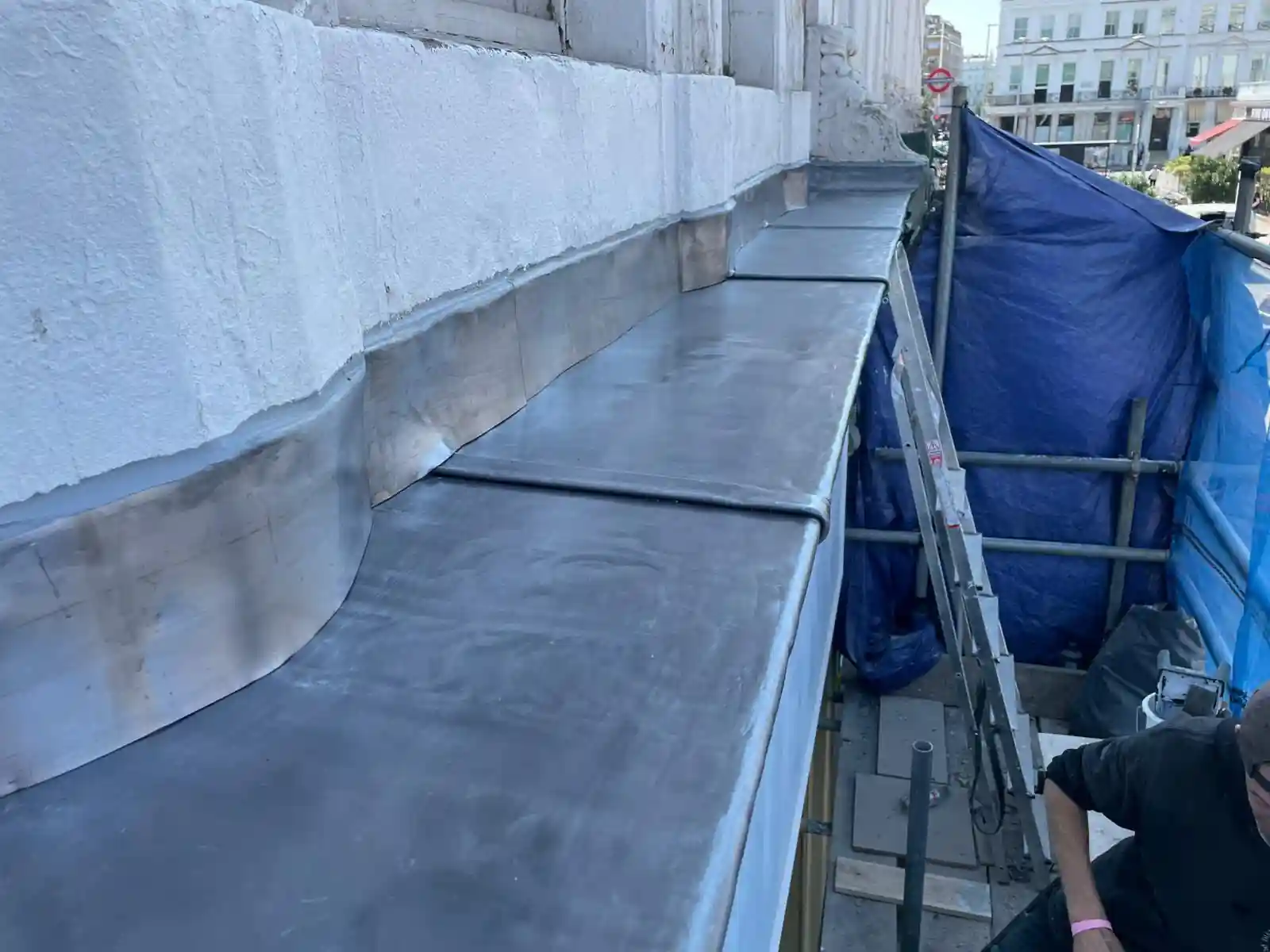
This depends on the specific property boundary and party wall arrangement, and can vary on Gunnersbury's semi-detached properties where a valley gutter runs directly along the line between two homes. In many cases responsibility is shared between both properties under the terms of the title deeds, since the gutter serves both roofs equally, but arrangements vary from pair to pair and are not something we can confirm without seeing the paperwork. We identify where the fault lies during our inspection, which is often useful evidence if a conversation with a neighbour is needed, but we recommend checking your property deeds or speaking to your neighbour directly to confirm responsibility before work on a shared section proceeds. If you are not sure who to contact, we can point you toward the right next step based on what we find on site.
Why does the same roof leak keep coming back?
A recurring leak usually means the original repair addressed the visible symptom rather than the underlying cause, commonly a blocked section of the shared valley gutter further along its run, or a second failure point in the dormer flashing that was not inspected the first time. On Gunnersbury's semi-detached houses this is often a valley gutter that was patched at the exact spot water was seen coming through, without checking the full length of the run on both sides of the party wall. We check the full length of any shared gutter and surrounding flashing during a repair, not only the exact spot where a stain appeared inside, since a valley gutter shared between two houses can have more than one weak point along its run. Checking the whole run once, rather than returning for a second visit after a repeat call out, is the approach we take as standard.
Can roof repairs be carried out without scaffolding?
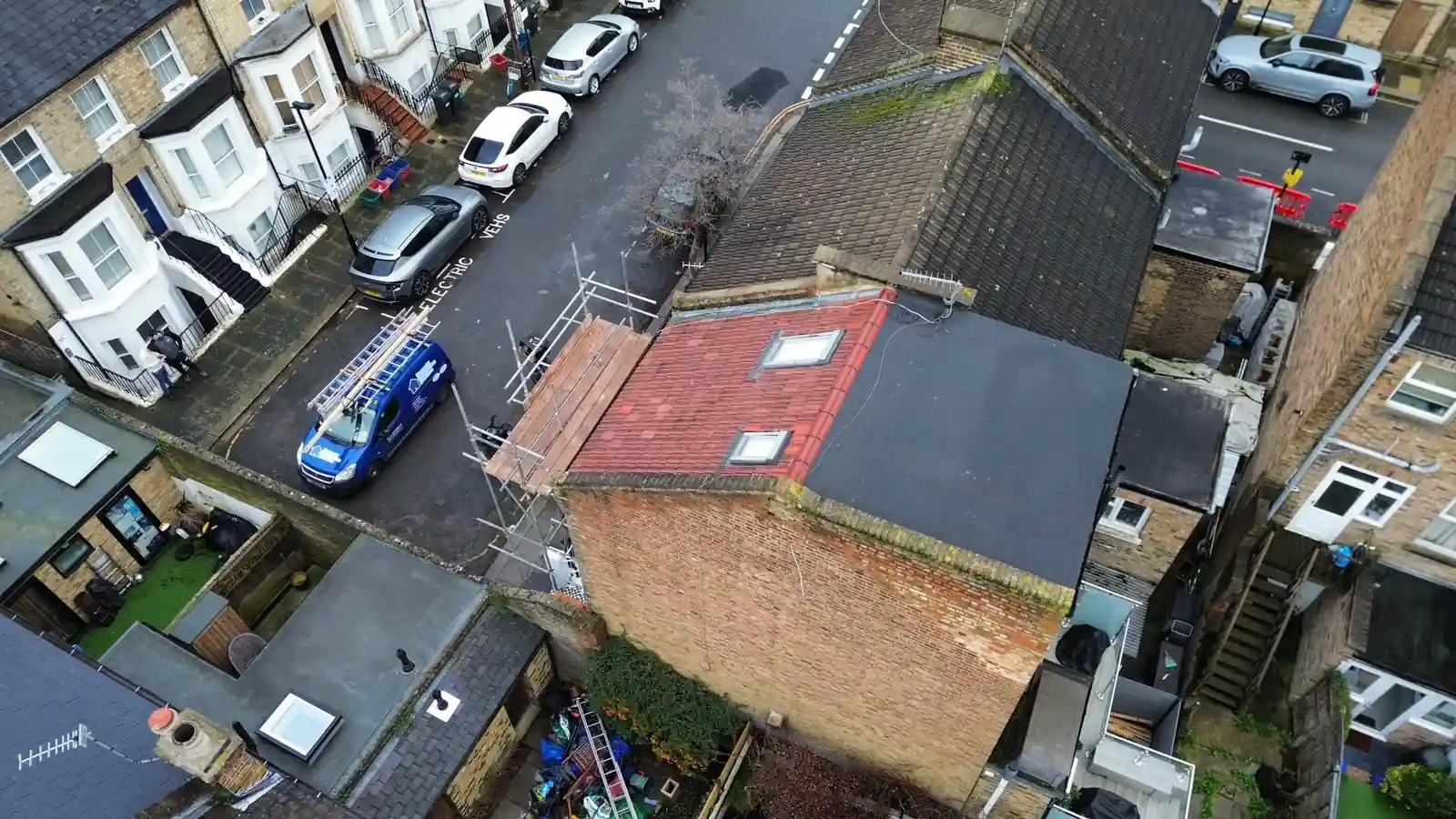
Many repairs on Gunnersbury's semi-detached houses can be carried out using a tower or ladder access, particularly for isolated tile replacement or gutter clearance. Larger jobs, such as full valley gutter renewal along a shared party wall or extensive tile work on a hip roof, may need scaffolding for safe access, especially where the roof pitch or a neighbouring extension limits how much can be reached from a ladder. We confirm the access method needed during the inspection so you know what to expect before work is scheduled, and we plan scaffolding to minimise how long it is up outside your property. Where scaffolding is required and access needs to be coordinated with next door because of a shared valley gutter, we speak to both households in advance so the job can start on the date agreed.
Do you offer a roof survey before a purchase or extension project?
Yes. We carry out roof condition inspections for buyers ahead of a purchase, and for homeowners planning a loft conversion or rear extension who want to know the condition of the existing roof before building work begins. The survey covers tile condition, hip and ridge detailing, valley gutters and any signs of water ingress, with a written report provided afterward. This is a common request in Gunnersbury given how many of the area's 1930s semis have already had a loft conversion added, and how many more are planned each year. A written report is useful evidence for a buyer negotiating on a property, or for a builder planning the roofing element of a wider loft conversion, and it gives you a clear picture of what condition the existing roof is in before any commitment is made.