Frequently Asked Questions About Roofing in Dulwich
The questions below cover what Dulwich customers ask us most often.
How quickly can you attend a roofing job in Dulwich?
We aim to carry out an on site assessment within two to three working days for standard repairs across Dulwich and the rest of SE21. For storm damage or an active leak we offer emergency callout and try to attend the same day, since a slipped slate or failed valley gutter on a large period roof can let a significant amount of water into the property if left. Our registered office is in Chiswick, West London, and Dulwich sits across town from our base, so we build travel time into scheduling rather than promising an arrival window we cannot meet. Dulwich is a core part of our South East London coverage alongside East Dulwich, Herne Hill and Kennington, and is not treated as a lower priority because of the distance. Once we have inspected the roof we confirm a schedule for any follow up work, so you know when the job will be completed.
Which parts of Dulwich and SE21 do you cover?
We cover every street in Dulwich Village and the full SE21 postcode area, from the large houses around College Road and Calton Avenue to the properties nearer North Dulwich station. We also cover the neighbouring parts of our South East London cluster, East Dulwich, Herne Hill and Kennington, so a job that sits close to a postcode boundary is not a problem. Coverage includes both residential roofing on Dulwich's period houses and the smaller number of commercial and institutional premises around Dulwich Village. Our engineers work directly for Property Restoration Services, we do not subcontract Dulwich work to a third party roofer working under our name. We also carry out work for schools and other institutional buildings that make up a notable part of Dulwich's built environment, alongside standard residential jobs. If you are unsure whether your street falls inside our standard coverage area, call us and we can confirm before booking an inspection.
How does your quoting process work?
We carry out a free, no obligation inspection of the roof before providing a quote. All quotes are provided following an initial assessment of the work required, we do not quote over the phone without seeing the roof first, since a valley gutter or chimney flashing problem on a large Dulwich roof can look very different once we are actually up there. Once you accept the quote we schedule the work and confirm a date, and for larger jobs such as a full re-roof on a conservation area property we provide a written scope of work you can share with the Dulwich Estate or a conservation officer if consent is needed. There is no call out charge for the initial inspection visit anywhere within our SE21 coverage area. We also explain any access requirements, such as scaffolding or a tower, as part of the same quote so there are no surprises once work is scheduled.
What happens once I book a roofing job in Dulwich?
Once you accept a quote we agree a date and confirm what access is needed, whether that is a ladder, a tower or scaffolding, which is common on Dulwich's taller period houses. Our engineer carries out the agreed work, matching slate, tile or flashing materials to the existing roof covering where the job is a repair rather than a full replacement. On multi stack roofs we check every chimney and valley as standard during the visit, since a second fault elsewhere on the roof is common on older properties that have not been fully surveyed in some years. Once the work is finished you receive a written summary of what was done, along with any maintenance advice. If anything unexpected is found once we are on the roof, we discuss it with you before proceeding rather than carrying out extra work without agreement.
What roofing problems are most common in Dulwich?
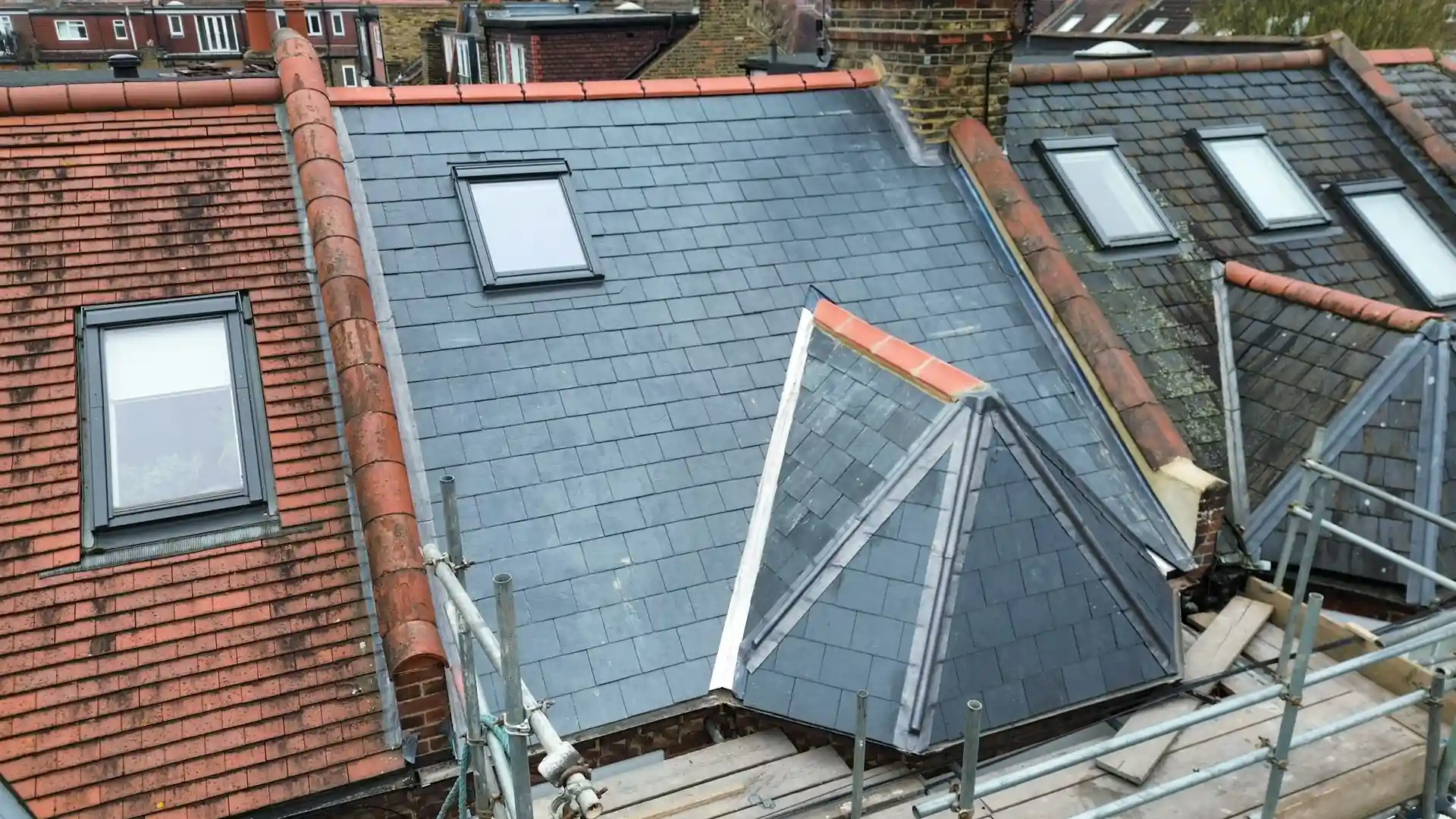
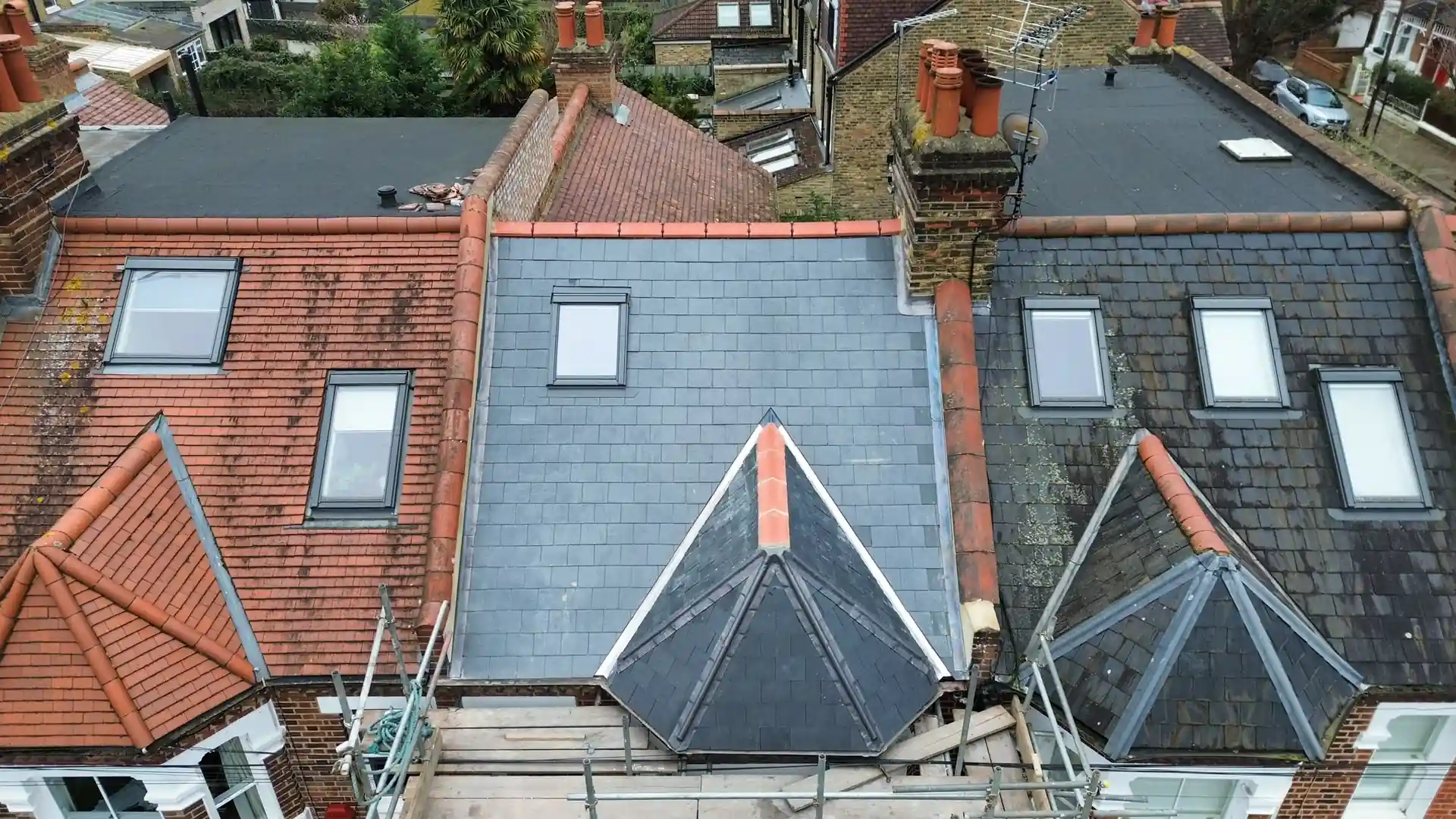
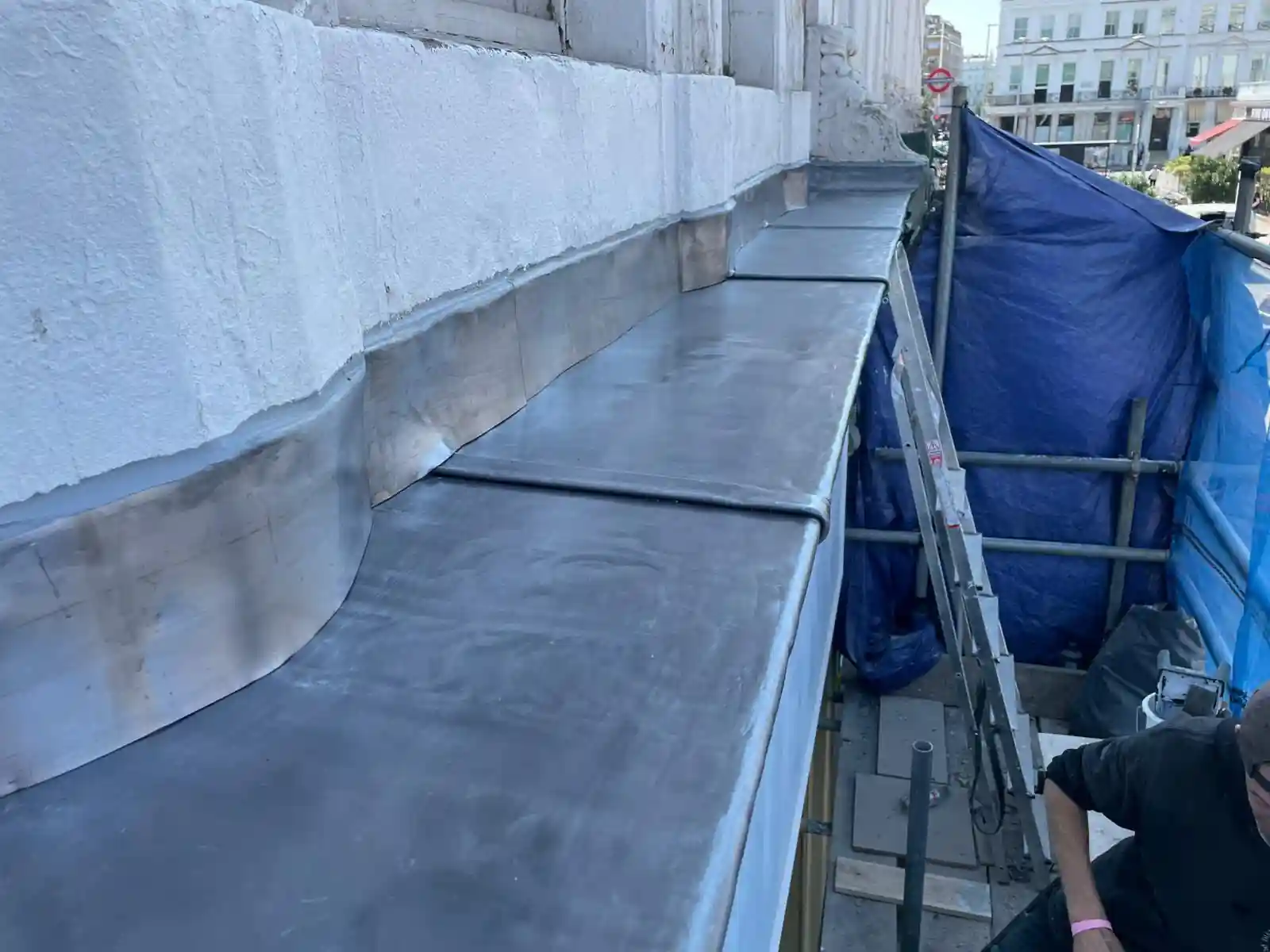
The most common issues we see in Dulwich relate to the scale and age of the area's Georgian, Victorian and Edwardian houses. Valley gutters between adjoining roof pitches and box gutters behind parapets are a frequent source of internal damp when they silt up or split, and with two or three chimney stacks on many properties, flashing failure around a stack is another regular call out. We also see slipped or cracked slate on older sections that have not been re-roofed, particularly where a previous repair used a mismatched material that has since failed on its own. Because Dulwich houses are larger than a standard terrace, a single fault can be harder to spot from ground level, which is why we check the whole roof during an inspection rather than only the reported area.
Which Dulwich streets do you see the most roofing work on?
We regularly work on the large houses around College Road, Dulwich Village itself, Calton Avenue and Court Lane, along with the streets nearer North Dulwich station. Properties on College Road and Calton Avenue tend to bring us valley gutter and chimney flashing work given the size and age of the roofs, while streets closer to North Dulwich station show a mix of late Victorian and Edwardian roofing alongside some smaller 1930s infill houses. Court Lane sees a similar pattern to Calton Avenue, with valley gutters between adjoining roof pitches a frequent repair. Streets closest to Dulwich Park also see a steady amount of gutter and chimney work given the mature tree cover nearby. None of this is unusual for an area like Dulwich, it reflects the mix of grand period houses, conservation controls and institutional buildings such as Dulwich College found across SE21.
Do you offer a roof survey before a purchase or renovation?
Yes. We carry out roof condition inspections for homeowners, buyers and builders who need a clear picture of a roof's condition before completing a purchase or starting a renovation project. The inspection covers the condition of the existing slate or tile, the state of valley gutters, box gutters and chimney flashing, and, where relevant, whether existing materials will satisfy Dulwich Estate or conservation area requirements for any planned work. A written report is provided afterward, which is useful evidence for a buyer negotiating on a large period property or for a builder planning a renovation. This is a common request in Dulwich given how many properties are older, individually detailed houses that have not always been well documented. We can also advise on the likely scope of any future roofing work as part of the same visit, which is useful for budgeting a wider renovation project.
Do we need consent to change roofing materials on a Dulwich property?
This depends on whether the property sits within the Dulwich Estate's management area or the wider conservation area, and much of Dulwich Village does. In many cases, work that changes the appearance of a roof, such as switching from natural slate to a different material, needs estate or conservation area consent before it can proceed, while like for like repairs using matching materials are usually more straightforward. We are not able to confirm consent requirements ourselves, since this sits with the Dulwich Estate and the local planning authority, but we can identify what materials are currently in use and provide a written specification that you can submit as part of an application. We recommend checking with the Estate or a planning consultant before committing to a change of material. This is worth checking early in any renovation project, since consent timelines can affect when roofing work is able to start.
Why does the same roof leak keep coming back?
A recurring leak usually means the original repair only addressed the visible symptom rather than the underlying cause. On a Dulwich period roof this is often a valley gutter or box gutter that was cleared or patched at the point where water was seen coming through, without checking the full length of the gutter or the flashing around nearby chimney stacks. It can also mean a second failure point elsewhere on a large multi pitch roof was missed during the first repair, since a fault on the far side of the roof is not always visible from the ground. We check the full valley, box gutter and surrounding flashing whenever we attend a leak on a Dulwich property, rather than only patching the exact spot where the damp patch appeared inside. Where a property has several valleys or chimney stacks, we treat the whole roof as one system during a repair rather than isolating the single reported fault.
Can roof repairs in Dulwich be carried out without scaffolding?
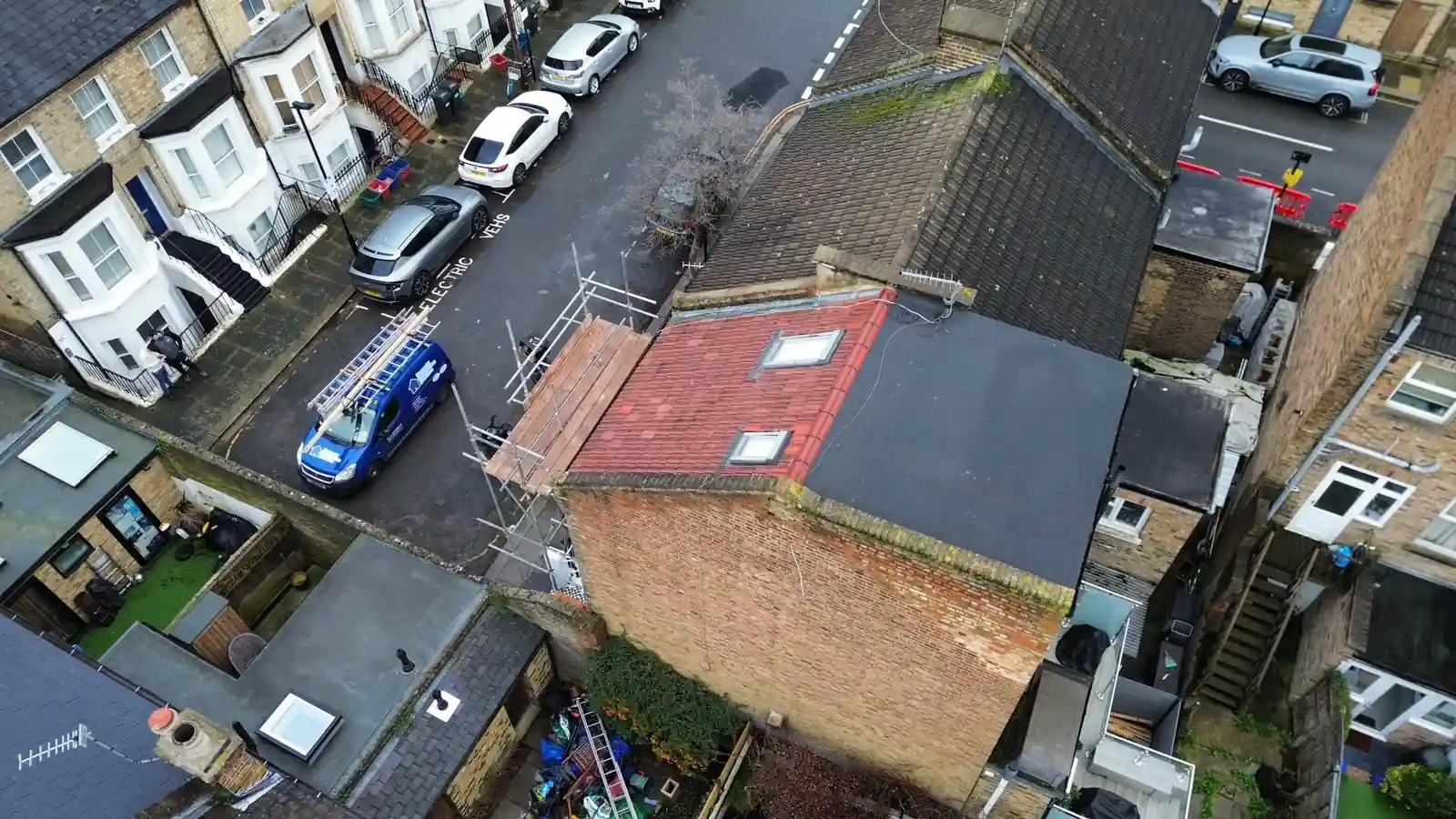
Many repairs on Dulwich's period houses can be carried out using a tower or ladder access rather than full scaffolding, particularly for isolated slate replacement, flashing repair or valley gutter clearance. Larger jobs, such as a full re-roof or extensive work across several chimney stacks, usually need scaffolding for safe access, especially given the height and roof pitch complexity of many Dulwich properties. We confirm the access method needed during the inspection, so you know what to expect before work is scheduled, and we plan scaffolding to minimise how long it is up outside your property. Where scaffolding is required on a quieter Dulwich street, we also check parking and access with you in advance so the job can start on the date agreed. We also factor in whether a neighbouring property's access might be needed for scaffolding on a shared boundary, which is common on Dulwich's larger plots.